
By DesiWed Editorial. Published 30 April 2026. Last updated 1 May 2026.
The 2026 lehenga, in one paragraph
Quick answer. Australian Indian brides walking into 2026 ceremonies are choosing lighter, photographable lehengas in pastels and ombre fades, paired with structured corset blouses and cape-style dupattas. Heritage red still anchors the main Hindu and Punjabi ceremony, but the second outfit is almost always softer: champagne, blush, sage, dusty lilac. Total kilo count is dropping. Day two has a new entrant: the pre-draped lehenga saree, which gives a saree silhouette without the eight-yard drama. Below, seven specific trends that AU bridal boutiques and Australian wedding press are reporting for 2026, with notes for an Australian outdoor ceremony and the DesiWed-listed vendors booked for the look. For pricing on any of these, request a quote from the boutiques and vendors named in the sources, or send your brief through the DesiWed listings linked throughout.
1. Pastels and ombre are the new statement
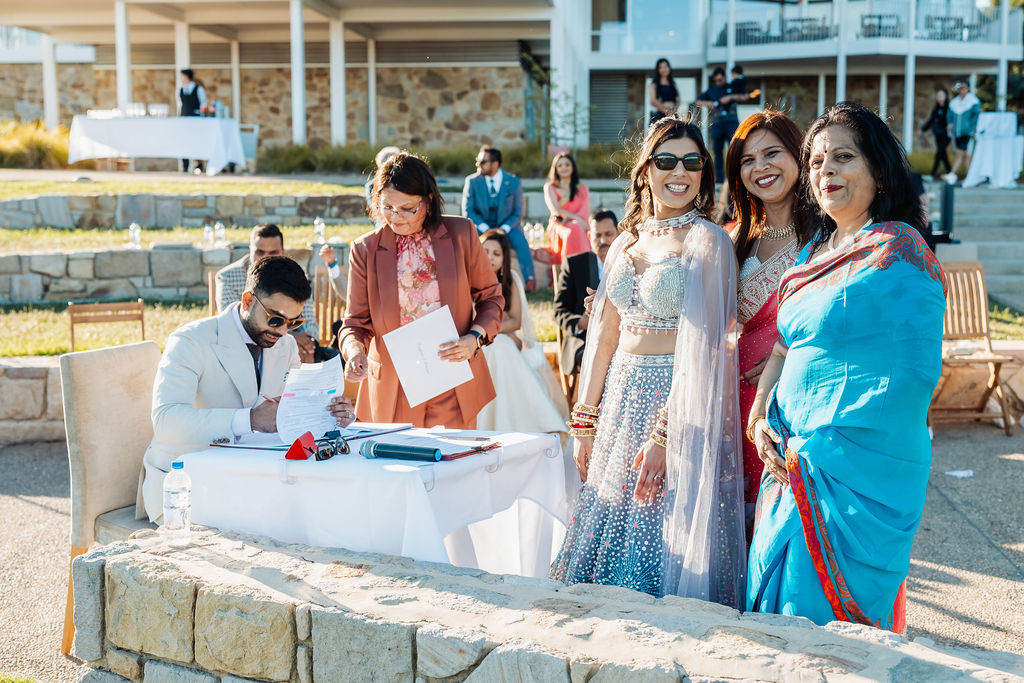
The biggest shift in 2026 is colour. Soft ivories, champagne golds, muted peaches, pistachio greens, powder blues and dusty lilacs have replaced the obligatory crimson for engagement, sangeet and second-ceremony looks. Australian bridal boutique Silk and Sparkle and Easy Weddings 2026 trend reports are running the same observation: brides want a lehenga that photographs differently from their mum’s album (Silk and Sparkle: Indian wedding fashion trends Sydney 2026; Easy Weddings: 2026 wedding dress trends).
The technique driving this is the ombre dye and gradient embroidery skirt: a hem in deep tone (jewel emerald, ink blue, plum) fading up to a near-white waist. It is forgiving in golden hour, which is exactly when most Sydney and Melbourne couples are scheduling their portraits. Be Captured Media, a DesiWed-listed Sydney photographer, is shooting more outdoor portrait blocks because pastel ombre lehengas hold their colour properly under harsh AU sun. Send your wedding date to Be Captured Media on DesiWed →
2. Cape dupattas, contour drapes and the death of the head veil for sangeet
The dupatta is the second hero piece of 2026. Brides are ordering two: a heavy embroidered head veil for the ferri or pheras, and a cape dupatta worn off the shoulders for the sangeet and reception. Manish Malhotra has been driving cape lehengas hard on his bridal runway since 2024 (Manish Malhotra Bridal), and the look has now fully landed in the Australian market. The cape gives the bride free arms for choreography, which matters when half the night is sangeet entrances and bridal party numbers.
For brides who want a single dupatta to do double duty, the contour drape (one corner pinned at the shoulder, the rest swept across the front) is the compromise. The Drape Diaries, a DesiWed-listed Sydney drapist, drapes the bride and the bridal party (mother, sisters, bridesmaids) on the day, which is increasingly the booking pattern: one drapist for the whole party, not just the bride. Book The Drape Diaries on DesiWed →
3. Corset blouses are doing what the choli used to
The blouse is the third trend, and it is borrowing structurally from Western bridal couture. Boned bodices, sweetheart and square necklines, internal cups and zip closures are now standard on couture orders. The choli is still common at the Hindu main ceremony, but the sangeet and reception blouse has become a tailored corset, often in a contrasting colour to the skirt (Mrs G: 2026 Indian wedding bridal trends).
This matters for the makeup artist’s brief. Corset bodices reshape the décolletage, which means the bridal makeup look has to balance for sharper collar bones and a more open chest line. Mariam Zafar Makeup, who works between Sydney and Melbourne, and Beauty by Nancy, who covers Sri Lankan and Tamil bridal, are both DesiWed-listed and can advise on contour and brow shaping for corset bodices at the trial stage. Enquire with Mariam Zafar Makeup on DesiWed → Book Beauty by Nancy on DesiWed →
4. Lighter fabrics, lower kilo count, real comfort
The single most practical 2026 shift is weight. The classic heavy raw silk and full-panel-zardozi bridal lehenga is being out-ordered by lighter organza, tulle and silk-blend builds with feather-light hand embroidery. Couture houses are leading the pivot, and Australian brides are following because the reality of an outdoor ceremony in February or November here is heat plus wind, not a Delhi marquee in December (Silk and Sparkle: 10 emerging Indian bridal trends 2026 to 2027; Indian Wedding Saree blog: Bridal lehenga trends 2026).
Lighter does not mean less ceremony. The embroidery is just placed differently: panels of sheer organza between heavy embroidered medallions, hand-applied 3D florals instead of all-over zari, pearl and resham clusters where mirror work used to be. AU boutiques like Silk and Sparkle (Sydney), IndiFeels (Melbourne) and Rajashree Bridal (Melbourne) are stocking lighter tulle and organza ranges. For couture, custom orders from India ship to Australia with insured bridal courier. Lead times and pricing vary by house and complexity, so request a quote at the design stage.
5. The pre-draped lehenga saree is the day-two power move
The pre-draped lehenga saree is the breakout silhouette of 2026 for the second day. It looks like a saree (pleated drape across the body, pallu over the shoulder) but is structurally a two-piece: a fitted belt or pleat panel pre-attached, paired with a corset or fitted blouse. The bride steps into it. No safety pins. No drape time. No risk of an unravelling pleat at the entrance.
This silhouette is doing especially well at Pakistani walimas and Sri Lankan Tamil second-day receptions, because the format gets the structured saree look without two hours of drape time. Pooja’s Couture, a DesiWed-listed Sydney designer, custom-makes pre-draped lehenga sarees, and the lead time is faster than a fully custom couture lehenga because the pleat panel is engineered, not hand-pleated. Enquire with Pooja’s Couture on DesiWed →
6. Heritage red is staying, but lighter
For the main Hindu or Punjabi ceremony, red is still doing the heavy lifting, but the colour story has matured. Tomato and chilli reds (warmer, slightly orange) are out-ordering the deep maroon of five years ago. Pure crimson is still common, but it is being paired with antique gold rather than yellow gold, and the embroidery is being lightened: pearl, resham and lighter zardozi instead of dense kundan. The result is a red that reads bridal but is not quite mum’s lehenga.
For Sri Lankan Tamil brides, the kandyan saree follows a parallel shift: maroon and burgundy still dominate, but kasavu gold edging is being done in lighter, hand-stitched trims. The poruwa stays formal; the second-day reception is where pastel lehengas come in.
7. The embroidery has shifted: pearl, 3D floral, resham, less zari
Embroidery is the seventh and final shift, and it ties the rest together. Heavy zari (metallic gold thread) and dense kundan are giving way to pearl strings, hand-applied 3D florals, resham (silk thread) and softer zardozi. This is partly couture-led and partly practical: lighter embroidery on lighter fabric is what makes the lighter lehenga possible at all.
The visible signal is in the close-up shots. Photographers are shooting more macro detail of pearl rosettes, 3D petals and resham floral fills. Taha Taqi Productions, a DesiWed-listed photographer working across Sydney’s Pakistani and Punjabi weddings, dedicates part of every couple’s portrait block in 2026 to detail shots of the lehenga work, which has become an Instagram and Pinterest format in its own right. Send your wedding date to Taha Taqi Productions on DesiWed →
What this means for content creators and the reel cut
Content creators are the second beneficiary of the 2026 silhouette. Lighter, pastel and ombre lehengas film better than heavy red ones, especially in vertical Reels and TikTok format. The slow-motion entrance shot, the dupatta-flick, the corset reveal: all of these read cleaner with lighter fabric. Sydney Storyteller and Reels by Mahvash, both DesiWed-listed, brief couples a week ahead about which lehenga is going to be on which event because the cut sequence is engineered around outfit changes, not just venue moments. Book Sydney Storyteller on DesiWed → Enquire with Reels by Mahvash on DesiWed →
How to actually book the look in Sydney or Melbourne
If you are reading this in April 2026 with a November ceremony, here is the realistic timeline. For custom couture from India, order at the start of stitching season for a six-month build window plus shipping plus local alterations. For an off-the-rack Australian boutique purchase, lead time is hours rather than months. For a saree drapist, lock in the booking now, because most are taking only one wedding per weekend in peak season.
For makeup, the trial booking matters more than the day rate. Two trials, six to eight weeks apart, with the actual jewellery and blouse in front of the artist, is the difference between a face that holds for ten hours of photographs and one that does not. Both Bhawna Makeup Artist and Beauty by Gowtham, DesiWed-listed in NSW and VIC respectively, run their trials this way. Enquire with Bhawna Makeup Artist on DesiWed → Book Beauty by Gowtham on DesiWed →
If you have not started: open the Ultimate Wedding Checklist on DesiWed and put the lehenga decisions in the right month so you stop chasing them last. The order matters: lehenga brief first, makeup trial second, drapist third, photographer brief fourth (so they know what they are shooting).
Frequently asked questions
How do I budget for a custom 2026 lehenga shipped to Australia?
Pricing varies materially by couture house, fabric, embroidery density, and whether it’s a main ceremony, sangeet or engagement piece. Request a quote directly from the designer or boutique against your specific brief (fabric, embroidery, lead time, fittings). Add a separate budget line for insured bridal courier shipping and Australian alterations.
Can I buy a 2026 trend lehenga in Australia rather than ordering from India?
Yes. Silk and Sparkle, IndiFeels and Rajashree Bridal stock pastel, ombre and lighter-build lehengas in 2026 ranges, mostly in Sydney’s Harris Park and Melbourne’s Tarneit and Dandenong. Off-the-rack lead time is hours, not months. Selection is narrower than couture but the boutiques can request from their suppliers.
Sources and further reading
- Silk and Sparkle: Top 5 Indian wedding fashion trends Sydney 2026
- Silk and Sparkle: 10 emerging Indian bridal trends 2026 to 2027
- Mrs G: 2026 Indian wedding bridal trends
- Indian Wedding Saree blog: Bridal lehenga trends 2026
- Easy Weddings Australia: 2026 wedding dress trends
- Manish Malhotra Bridal Collection
- IndiFeels Australia: Indian lehengas Melbourne and Sydney